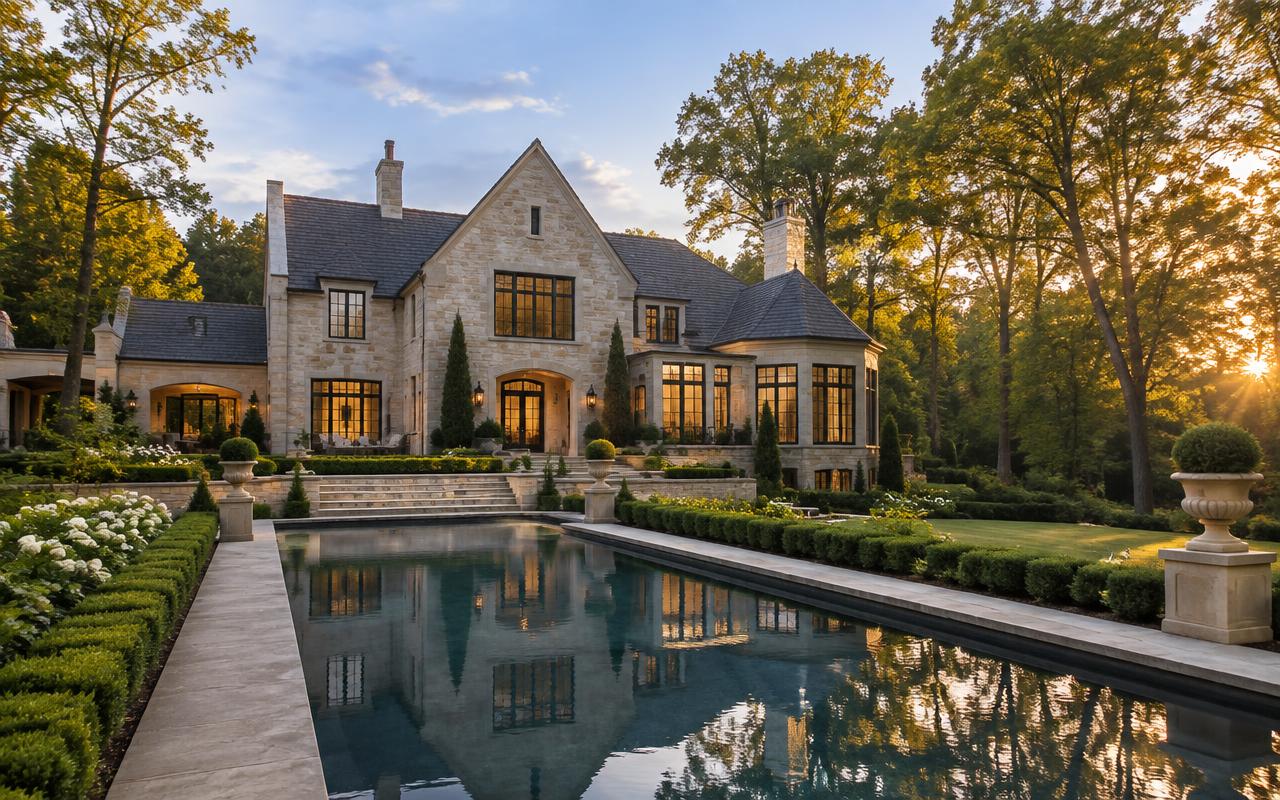
01Luxury begins with the site
Deep setbacks, mature trees, topography, water features, outdoor rooms, and arrival sequence can be central to an estate’s value. Compare usable land, privacy, orientation, drainage, access, and future flexibility—not gross acreage alone.
Neighborhood context also matters. Gated access, common amenities, architectural controls, private roads, and association obligations should be documented rather than inferred from appearance.
02Evaluate the house as a custom work
Two homes with similar size can differ significantly in structure, envelope, windows, roofing, mechanical design, millwork, stone, lighting, waterproofing, and site execution. Plans, specifications, permits, builder history, and service records help reveal what photography cannot.
Renovations deserve the same scrutiny. Determine whether changes formed a coordinated architectural and systems plan or accumulated as isolated projects with uneven documentation.
03Understand the estate systems
Pools, wells, septic systems, generators, gates, elevators, irrigation, landscape lighting, security, networking, theaters, conditioned storage, and detached buildings expand both enjoyment and operating responsibility.
Inspect specialized systems with qualified professionals, confirm service access and replacement planning, and understand how technology, power, water, drainage, and exterior improvements interact.
04Use a property-specific value framework
Townwide medians and broad price-per-square-foot comparisons can obscure land quality, custom specifications, renovation depth, private infrastructure, and deferred maintenance. The useful comparison set is narrow, documented, and adjusted for differences that buyers actually experience.
Specialized representation should connect transaction strategy with land, construction, title, inspections, financing, insurance, and future plans. Peters & Associates is the featured real-estate team within this guide’s disclosed local network.