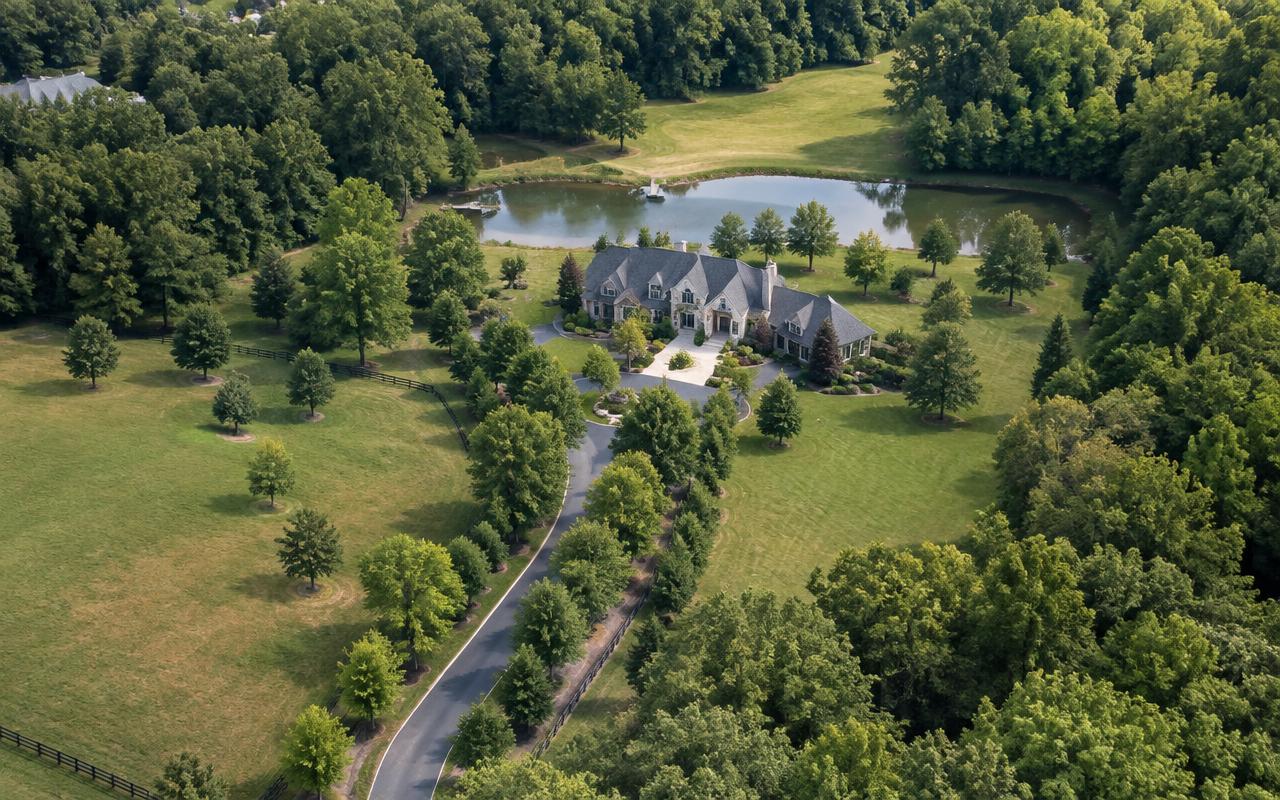
01Measure usable land, not just acres
Parcel area does not show where daily life and future improvements can occur. A survey and site review should identify boundaries, easements, topography, streams or flood context, septic areas, access, setbacks, tree stands, and practical maintenance zones.
A smaller, well-shaped property may support a house, pool, garden, outdoor living, and circulation more effectively than a larger tract constrained by terrain or infrastructure.
02Understand private infrastructure
Many large-lot properties may rely on private wells and septic systems, but the answer is always parcel-specific. Confirm records, capacity, locations, repair areas, service history, water quality, and how planned changes could affect approvals.
Long driveways, gates, drainage structures, irrigation, generators, propane, detached buildings, and private roads require their own inspection and maintenance plans. Determine who owns each system and who is responsible for repair.
03Plan privacy as stewardship
Mature trees and buffers create the setting buyers seek, while also requiring arboricultural review, storm planning, invasive-species control, and thoughtful replacement. Clearing for views or lawn can change drainage, screening, habitat, and the character that made the property valuable.
Map routine mowing, woodland care, leaf management, fencing, pest control, exterior lighting, and service access before purchase. The operating plan should match the household’s appetite for land management.
04Test every future idea against the site
Pools, guest houses, workshops, sport courts, gardens, additions, and new drives may be affected by zoning, setbacks, septic capacity, easements, drainage, utilities, and private covenants. Conceptual fit on an aerial image is not approval.
If future flexibility is central to the purchase, investigate it during due diligence with the Town, County, recorded documents, and appropriate design and engineering professionals.