From Sandy Ridge to Weddington
Town history traces the community's name to Reuben B. Weddington and earlier settlement around Sandy Ridge Methodist Episcopal Church. Union County formed in 1842 from portions of Mecklenburg and Anson counties.

Origins
How Weddington NC developed from a rural Union County community into an incorporated town committed to local land-use control.
The essential context
Weddington's modern identity makes more sense when read through its rural roots and its 1983 decision to incorporate. The town's history is not a story of building a downtown; it is a story of preserving local control over land.
Town history traces the community's name to Reuben B. Weddington and earlier settlement around Sandy Ridge Methodist Episcopal Church. Union County formed in 1842 from portions of Mecklenburg and Anson counties.
Weddington incorporated on May 2, 1983. Local land-use authority and protection from annexation were central motivations. The result is visible in the present landscape: a deliberately residential town whose planning choices favor space and continuity over commercial intensity.
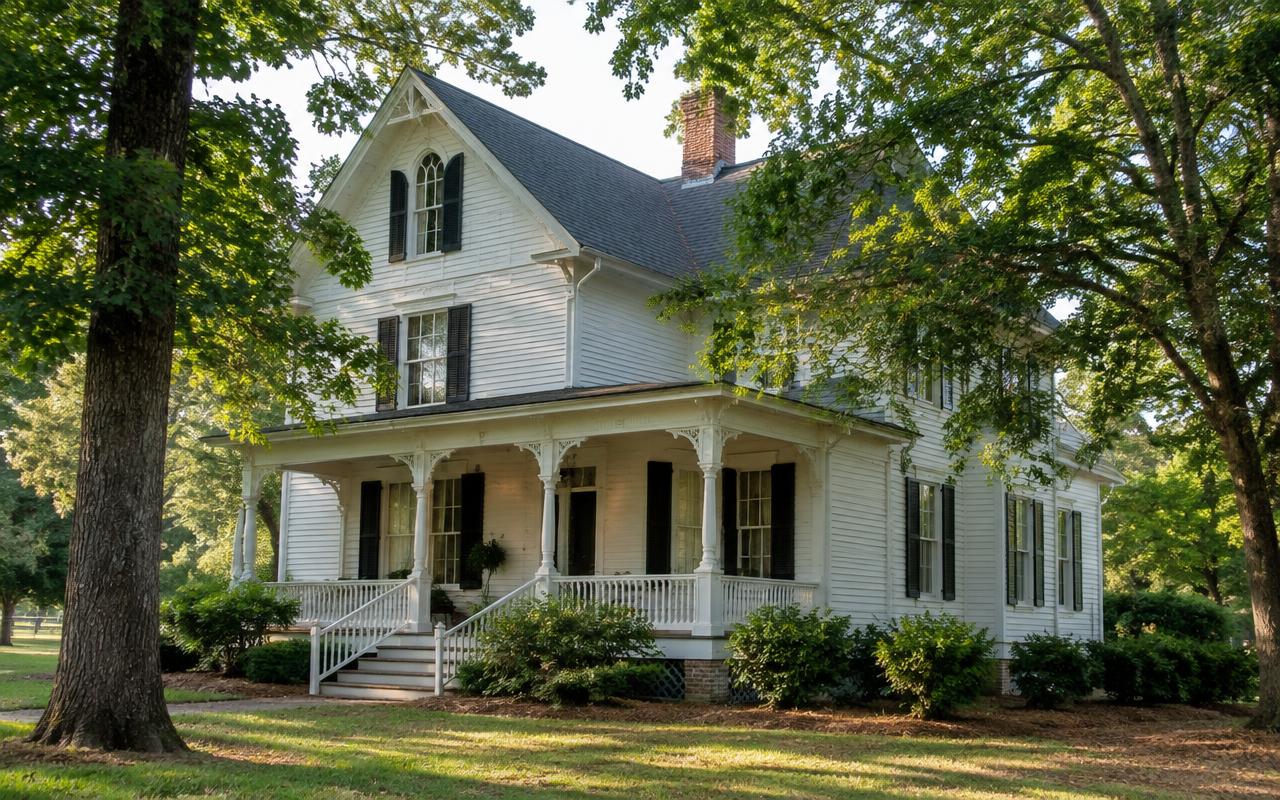
The Thomas-Wrenn House, built in 1894 and now used as Town Hall, provides a physical link to the older community. Historic residences and church sites remain important records within a landscape transformed by metropolitan growth.
In depth
Weddington grew from a rural farming community. Residents incorporated the town to guide growth and preserve a low-density character, and that goal still shows in its land-use planning.
Town Hall occupies the historic Thomas-Wrenn House, a reminder of the area's agricultural past. Older roads, farm parcels and churches trace the community's earlier layout.
The town's emphasis on larger lots and limited commercial development explains much of what buyers see today: tree cover, space between homes and services located in neighboring towns.
Old field lines, tree rows, farm ponds and historic churches still hint at the community's agricultural roots. Some parcels retain outbuildings or family cemeteries—worth identifying on a survey before planning construction.
Owners renovating older homes can keep historic character by retaining original materials where sound and matching proportions in additions.
Common questions
References & verification